
Captive Insurer
Captive Insurer - Successful captive operations need to be thoroughly researched and properly planned to consider all actuarial, tax, regulatory and accounting issues. A captive insurance company is created to augment or replace existing insurance coverages, finance arrays of exposures, or render coverage for unique risks. In the most simplistic terms, a captive insurance company is an insurance subsidiary of a noninsurance entity or parent and is owned by the insured. The operating business receives a tax benefit by taking an ordinary deduction for premiums paid to the captive insurance company. Businesses use captive insurance companies as a risk management tool. Captive insurance companies offer a way for companies to control costs, reap tax benefits, and cover risks that commercial insurance companies might be unable or unwilling to insure.
A captive insurance company is an entity created and controlled by a parent whose main purpose is to provide insurance to its corporate owner. The article details the final regulations issued by the treasury department and the internal revenue service (irs) on january 14. [1] the company focuses its service on the specific risks of the insureds and is incentivized to price the insurance near cost, since it has no separate investors. What is the purpose of captive insurance? Captive insurance companies offer a way for companies to control costs, reap tax benefits, and cover risks that commercial insurance companies might be unable or unwilling to insure.

Captive Insurance Company Captive Insurer ALEVO
How can it be used? Captive insurance companies offer a way for companies to control costs, reap tax benefits, and cover risks that commercial insurance companies might be unable or unwilling to insure. The captive insurance company is classified as a c corporation for u.s. The ideology behind this method is that the parent company may save regarding overhead costs.

SOLVEDa. Define a captive insurer. b. Explain the advantages of a
Its primary purpose is to insure the risks of its owners, and its insureds benefit from the captive insurer's underwriting profits. Successful captive operations need to be thoroughly researched and properly planned to consider all actuarial, tax, regulatory and accounting issues. A captive insurance company, also known as a captive or captive insurer, is a subsidiary or separate legal entity.
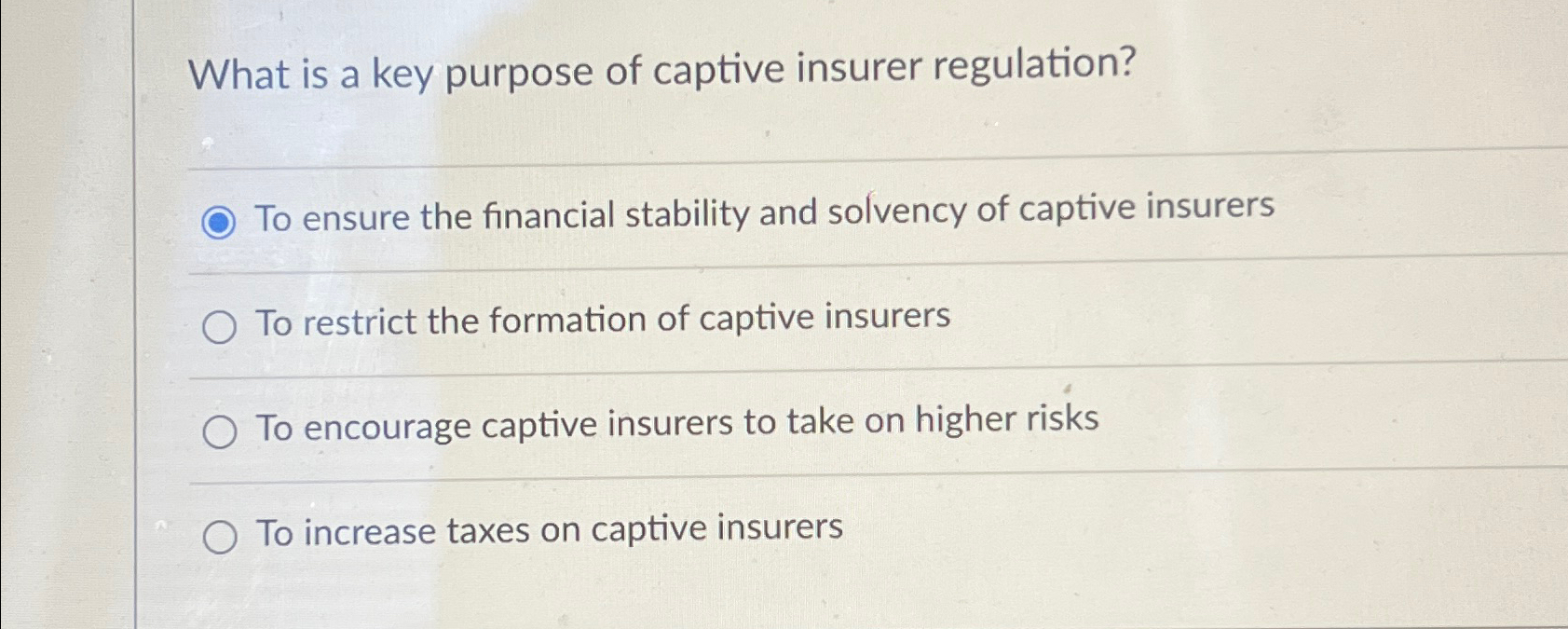
Solved What is a key purpose of captive insurer
The captive insurance company is classified as a c corporation for u.s. How can it be used? The article details the final regulations issued by the treasury department and the internal revenue service (irs) on january 14. Its primary purpose is to insure the risks of its owners, and its insureds benefit from the captive insurer's underwriting profits. Successful captive.

Captive Health Insurance And What You Need To Know
But is a captive right for your organization? With a captive insurance structure, you can ensure that your risks are written into policies as you see fit — without ambiguous or obscure wording or using terms that strongly benefit your. Captive insurance companies offer a way for companies to control costs, reap tax benefits, and cover risks that commercial insurance.

Fronting CAPTIVE EXPERTS LLC
A captive is an insurance company owned by the. But is a captive right for your organization? Businesses use captive insurance companies as a risk management tool. Learn how captives provide unique risk management solutions and discover the regulatory landscape surrounding them. Captive insurance involves setting up your own insurance company to assert greater control over your risk management, tax.
Captive Insurer - With higher premiums, a lack of capacity, increased deductibles, and more stringent terms and conditions, captive insurance use is more popular than ever. A “captive” is an entity that elects to be taxed under section 831(b) of the internal revenue code, issues or reinsures a contract that any party treats as insurance when filing federal taxes, and is at least 20 percent owned by an “insured”, an “owner” of an insured, or a person related to an insured or an owner. A captive insurance company’s financial foundation relies on initial capitalization and ongoing funding mechanisms, which must align with regulatory mandates and actuarial assessments of risk exposure. Explore the world of captive insurance and its various forms, from pure captives to risk retention groups. The captive insurance company is classified as a c corporation for u.s. But is a captive right for your organization?
The operating business receives a tax benefit by taking an ordinary deduction for premiums paid to the captive insurance company. A “captive” is an entity that elects to be taxed under section 831(b) of the internal revenue code, issues or reinsures a contract that any party treats as insurance when filing federal taxes, and is at least 20 percent owned by an “insured”, an “owner” of an insured, or a person related to an insured or an owner. Successful captive operations need to be thoroughly researched and properly planned to consider all actuarial, tax, regulatory and accounting issues. But is a captive right for your organization? The article details the final regulations issued by the treasury department and the internal revenue service (irs) on january 14.
The Purpose Of A Captive
The ideology behind this method is that the parent company may save regarding overhead costs and profits which would otherwise be charged by the insurance company. What is a captive insurance company? A captive insurance company, also known as a captive or captive insurer, is a subsidiary or separate legal entity established, fully owned, and controlled by its parent entity (the insured). Captive insurance companies are formed by companies or groups of companies as a form of alternative insurance to better manage their own risk.
Explore The World Of Captive Insurance And Its Various Forms, From Pure Captives To Risk Retention Groups.
A captive insurance company is an entity created and controlled by a parent whose main purpose is to provide insurance to its corporate owner. Successful captive operations need to be thoroughly researched and properly planned to consider all actuarial, tax, regulatory and accounting issues. Its primary purpose is to insure the risks of its owners, and its insureds benefit from the captive insurer's underwriting profits. A “captive” is an entity that elects to be taxed under section 831(b) of the internal revenue code, issues or reinsures a contract that any party treats as insurance when filing federal taxes, and is at least 20 percent owned by an “insured”, an “owner” of an insured, or a person related to an insured or an owner.
Businesses Use Captive Insurance Companies As A Risk Management Tool.
Learn how captives provide unique risk management solutions and discover the regulatory landscape surrounding them. A captive is an insurance company owned by the. In the most simplistic terms, a captive insurance company is an insurance subsidiary of a noninsurance entity or parent and is owned by the insured. We will also discuss how the captive owner can invest and retain profits in the captive as well as receive dividends from the captive.
With Higher Premiums, A Lack Of Capacity, Increased Deductibles, And More Stringent Terms And Conditions, Captive Insurance Use Is More Popular Than Ever.
Captive insurance companies offer a way for companies to control costs, reap tax benefits, and cover risks that commercial insurance companies might be unable or unwilling to insure. [1] the company focuses its service on the specific risks of the insureds and is incentivized to price the insurance near cost, since it has no separate investors. Within this article, we will be discussing how a captive is structured and set up, as well as how policy premiums flow from the captive owner's business to the captive insurance company. A captive insurance company’s financial foundation relies on initial capitalization and ongoing funding mechanisms, which must align with regulatory mandates and actuarial assessments of risk exposure.